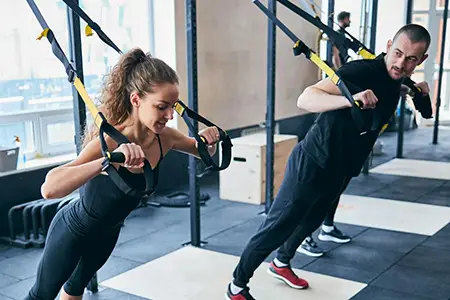

Core Stability Training: The Scientific Foundation of Strong, Pain-Free Movement
Core stability training is often reduced to abdominal exercises, yet its proper role is far more complex and far more important. From a biomechanical and physiological perspective, core stability refers to the body’s ability to control the trunk and pelvis while resisting unwanted movement of the centre of mass, particularly when the arms and legs are producing force.
Every movement, walking, lifting, rotating, running, or changing direction, creates forces that pass through the spine. A well-functioning core manages these forces efficiently, allowing movement to feel controlled, coordinated, and powerful rather than unstable or painful.
At SVR Personal Training, core stability training is used to improve movement quality, spinal control, and long-term physical resilience, not simply to strengthen isolated muscles.
What Is Core Stability?
Core stability describes the neuromuscular ability to maintain control of the spine and pelvis while movement occurs elsewhere in the body. Rather than limiting movement, effective core stability keeps the spine supported while the limbs generate force.
The core functions as a central stabilising system, coordinating muscular activity to control posture, balance, and load transfer. When this system works well, movement becomes smoother, stronger, and more efficient. Additionally, when control is reduced, the body often compensates through poor posture, inefficient movement patterns, or recurring discomfort.
The Core Muscles: How the System Works
The core is not a single muscle or area. The core is best understood as a group of muscles that work together to stabilise the spine, manage pressure within the trunk, and transfer force between the upper and lower body.
Key muscles involved in core stability include:
- Transversus abdominis – a deep abdominal muscle that provides tension around the trunk, helping to stabilise the spine before movement occurs
- Multifidus – small muscles located along the spine that support segmental spinal control
- Erector spinae – muscles that run along the back of the spine, contributing to spinal extension, postural support, and load management
- Diaphragm – the primary muscle of breathing, which also plays a crucial role in trunk stability through pressure regulation
- Pelvic floor muscles – muscles at the base of the pelvis that support pelvic organs and contribute to spinal and pelvic control
- Obliques and rectus abdominis – muscles that assist with rotation, flexion, and force production
Rather than working in isolation, these muscles function as an integrated system. Core stability training aims to improve how well they coordinate, not simply how strong each muscle becomes individually.
Postural Realignment: Laying the Foundation
For core stability training to be truly effective, postural realignment is addressed first when necessary. Postural realignment focuses on restoring correct spinal and pelvic positions and retraining the nervous system to activate stabilising muscles efficiently. Completing this step ensures that the muscles are working from a mechanically optimal position.
By improving alignment before progressive core exercises, clients move in safer, more efficient patterns. Correct alignment prevents compensatory movements that could reinforce poor posture or contribute to discomfort.
Core Stability Training: Strengthening and Maintaining Posture
Once alignment is restored, core stability exercises build strength, coordination, and endurance in the muscles that control the spine and pelvis. Properly programmed core training dynamically reinforces good posture, allowing it to be maintained during daily activities, exercise, and sport.
Following this two-step approach, realignment followed by stability training, ensures that posture improvements are functional, lasting, and transferable to real-life movement.
Core Stability and Lower Back Pain
Lower back pain is rarely caused solely by weakness. In many cases, discomfort is linked to how well the spine is controlled during everyday movements.
Core stability training, after postural realignment, may assist by:
- Improving control of spinal motion
- Reducing unnecessary strain on spinal tissues
- Increasing confidence during movement
- Supporting a safe return to regular activity
Training Adaptations: What Changes With Practice
When core stability training is appropriately loaded and progressively structured, meaningful physiological adaptations occur. Improvements develop in neuromuscular coordination, muscle activation timing, and the ability of the trunk to resist unwanted movement under load.
The adaptations improve how the body responds to training, daily activity, and sporting demands, rather than simply increasing fatigue tolerance.
Core Stability, Performance, and Everyday Movement
A stable trunk provides a reliable base from which the limbs can generate force. Improved trunk control enhances balance, coordination, and force transfer during lifting, running, and multi-directional tasks.
Better core stability often results in:
- Stronger, more controlled movement
- Improved balance and agility
- Greater efficiency during exercise and sport
- Increased confidence in everyday tasks
What Core Stability Training Delivers
When integrated into a well-structured programme, core stability training supports:
- Improved postural control and spinal alignment
- Reduced recurrence of lower back pain
- Better balance and movement awareness
- More efficient force transfer throughout the body
- Reduced reliance on compensatory movement patterns
- A stable foundation for all forms of movement
Core Stability Training at SVR Personal Training
At SVR Personal Training, core stability training is individualised and assessment-led. Programmes are built around movement quality, postural control, and personal goals.
Exercises are progressed to challenge coordination, control, and strength without unnecessary spinal stress. The aim is not to fatigue the core, but to train it to function effectively and maintain posture dynamically.
Frequently Asked Questions
Is core stability the same as abdominal training?
Core stability training is not the same as traditional abdominal training. Abdominal exercises often focus on muscle fatigue or appearance, whereas core stability training focuses on controlling spinal and pelvic movement during functional tasks.
Can core stability training help with lower back pain?
When combined with postural realignment and sensible progression, core stability training can support lower back health by improving spinal control and reducing excessive movement.
Do I need to be strong before starting core stability training?
No. Exercises can be scaled to suit all ability levels, with progressions based on control, coordination, and movement quality rather than maximal load.
Is core stability training only for athletes?
No. Core stability training benefits anyone, from sedentary individuals to athletes, by improving movement control, reducing injury risk, and enhancing everyday performance.
How often should core stability be trained?
Training frequency depends on goals, load, and recovery. Most people can integrate core stability work multiple times per week when it is appropriately programmed.
Summary
Core stability is about control, coordination, and efficient movement, not endless abdominal exercises. Addressing postural alignment first, followed by targeted core stability training, ensures posture improvements are functional, sustainable, and transferable to daily life and sport.
At SVR Personal Training, this evidence-based, two-step approach helps clients move with confidence, reduce injury risk, and improve long-term physical performance.
Evidence-Based Guidance
The concepts presented are informed by established research in biomechanics, motor control, and strength and conditioning. Core stability training is applied in accordance with best-practice principles to ensure safety, effectiveness and individual suitability.
The above content is intended for educational purposes and does not replace personalised medical or exercise advice.
Recent News
Resistance Training: The Science-Based Foundation of Strength, Health, and Longevity
Kettlebell Training: Evidence-Based Strength, Endurance, and Functional Fitness